
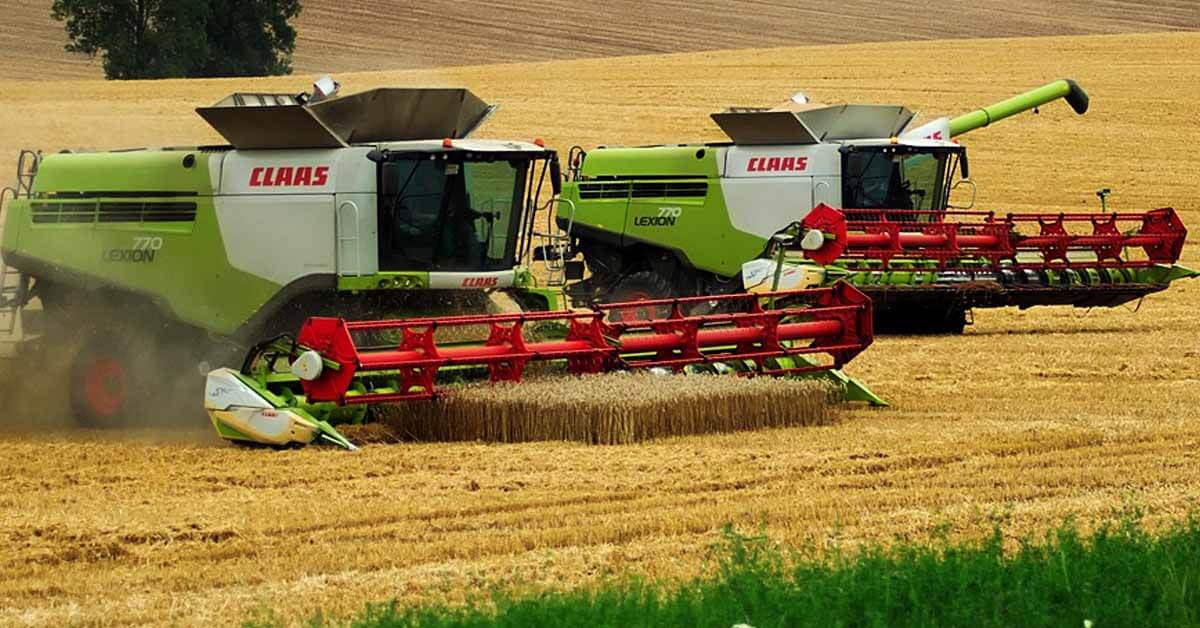
John Deere 9770 STS combine was a true powerhouse in its day and remains a highly sought-after workhorse on the used market.
When you talk about combines that defined an era of high-capacity, technology-driven harvesting, the John Deere 9770 STS combine is always at the top of the list.
Produced from the mid-2000s to the early 2010s, this machine was the flagship of Deere’s STS (Single-Tine Separation) line.
It represented a perfect balance of raw power, innovative technology, and operator comfort that set a new standard.
For today’s farmer or custom harvester, a well-maintained John Deere 9770 STS combine offers incredible value and performance, often without the complexities of modern emissions systems.
Overview
The John Deere 9770 STS combine is a large-class, rotary-style combine designed for high-volume producers.
Its core is the patented Single-Tine Separation system, a single, large-diameter rotor that handles both threshing and separation.
This design is known for being incredibly aggressive in separating grain from the straw while remaining gentle on the grain itself, minimizing damage and loss.
It was built to power through the toughest conditions—high-moisture corn, heavy-yielding soybeans, and thick stands of small grains.
Key Specifications
Engine
The John Deere 9770 STS combine is powered by the John Deere 13.5-liter PowerTech Plus diesel engine.
This was a marvel of engineering for its time and remains a robust and reliable powerplant.
Technology
It features a high-pressure common-rail fuel injection system and a Variable Geometry Turbocharger (VGT).
This combination provided a broad, flat torque curve, meaning the machine had plenty of power on tap even at lower RPMs, which is crucial for maintaining ground speed under heavy load.
Efficiency
The VGT spools up quickly, reducing turbo lag and improving overall fuel efficiency compared to older fixed-turbo designs.
Emissions
A major selling point on the used market today is that this engine is pre-DEF/DPF.
It does not require Diesel Exhaust Fluid (DEF) or have a Diesel Particulate Filter (DPF) to regenerate.
This simplifies operation and reduces long-term maintenance costs for many owners.
Key Features
The John Deere 9770 STS combine wasn’t just about horsepower; it was about smarter harvesting.
ProDrive™ Transmission
This was a game-changer.
ProDrive is a hydro-mechanical, infinitely variable transmission.
The operator could select a “harvest speed” and a “transport speed” and shift between them on the go with a button on the joystick, without stopping or using the clutch.
This meant you could slow down for a tough spot in the field and instantly get back to full speed without losing momentum or productivity.
ActiveYield™ Monitoring
This system used sensors to monitor grain loss and quality out of the separator and cleaning shoe.
It would then automatically adjust rotor speed and fan speed on the fly to optimize performance.
If losses increased, it would make adjustments to bring them back down, essentially automating a critical part of the operator’s job.
HarvestSmart™ Auto-Ground Speed
This system worked in tandem with the engine and transmission to maintain a consistent feed rate.
As the crop density changed, HarvestSmart would automatically adjust the combine’s ground speed to keep the rotor and cleaning system operating at their optimal capacity, preventing overloading or underloading.
CommandView™ Cab & CommandARM™
Deere set the standard for operator comfort.
The CommandView cab offered a 360-degree view of the header and surroundings.
The CommandARM integrated all major machine controls—header, threshing, unloading—into a single, ergonomic console to the operator’s right, reducing fatigue and improving efficiency.
Jd 9770 sts combine Performance and Usage
The John Deere 9770 STS combine excels in large-scale operations.
Its massive grain tank and fast unloading speed minimize downtime in the field.
It’s a favorite for:
Corn: With the right corn head (up to 12- or 16-row), it can devour high-yielding corn with ease.
Soybeans & Small Grains: Paired with a 35-40 ft draper or flex header, its gentle handling is perfect for fragile soybeans, and its high capacity shines in wheat and barley.
The combination of ProDrive and the STS rotor makes it incredibly versatile.
You can push it hard in ideal conditions and have the confidence to slow it down and be methodical when the weather turns or the crop gets tough.
John Deere 9770 STS combine Price (Used Market)
Pricing for a used John Deere 9770 STS combine varies widely based on hours, condition, location, and included features (like a header or precision ag upgrades).
Low-End (High Hours, Basic): You might find a higher-hour machine (3,500+ hours) for $75,000 – $95,000.
Mid-Range (Average Hours, Good Condition): A more typical machine with 1,800-2,800 hours in good working order will be in the $100,000 – $135,000 range.
High-End (Low Hours, Excellent): A meticulously maintained, low-hour machine with premium features can command $140,000 – $170,000+.
Always check recent auction results and dealer listings for the most accurate pricing in your area.
Parts and Maintenance
Parts Availability
Parts are readily available through John Deere dealers and a robust aftermarket network.
Common wear items like belts, chains, sickle sections, and concaves are easy to source.
Maintenance Schedule: Adherence to the manual is key.
Daily: Grease all points, check fluid levels (engine oil, coolant, hydraulic oil), clean the radiators and screens, and empty the stone trap.
Every 100 Hours: Change engine oil and filter, inspect air filter, check belt tension.
Annually/Off-Season: A full service is recommended. This includes changing hydraulic filters and fluid, transmission fluid, and thoroughly cleaning the entire machine, especially the cooling package and rotor area.
Common Problems
Even a great machine has its quirks.
When inspecting a used John Deere 9770 STS combine, pay close attention to:
Stone Trap: Ensure it has been cleaned regularly. Neglect here can lead to rotor damage.
Rotor Bearings: These are high-load components. Listen for any unusual noises from the rotor area during operation and check maintenance records for their replacement history.
Electrical System: The GreenStar 2 or 3 displays and wiring can sometimes be finicky. Check that all monitors, sensors, and controllers are functioning correctly.
Feeder House & Elevator Chains: Check for stretch and wear on the feeder house chain and the cross and grain tank elevators. These are high-wear items.
Hydraulic Leaks: Inspect all hydraulic lines, hoses, and fittings, especially around the header lift cylinders and the drive motors.
Conclusion
The John Deere 9770 STS combine is more than just a piece of used equipment; it’s a testament to an era of agricultural innovation.
It offers a level of capacity, comfort, and technology that is still highly relevant today.
For the operator who wants high performance without the operational and maintenance demands of a Tier 4 engine, the John Deere 9770 STS combine is an outstanding choice.
It’s a powerful, reliable, and proven machine that can still get the job done, season after season, making it a true modern classic in the world of combines.





Leave A Comment