
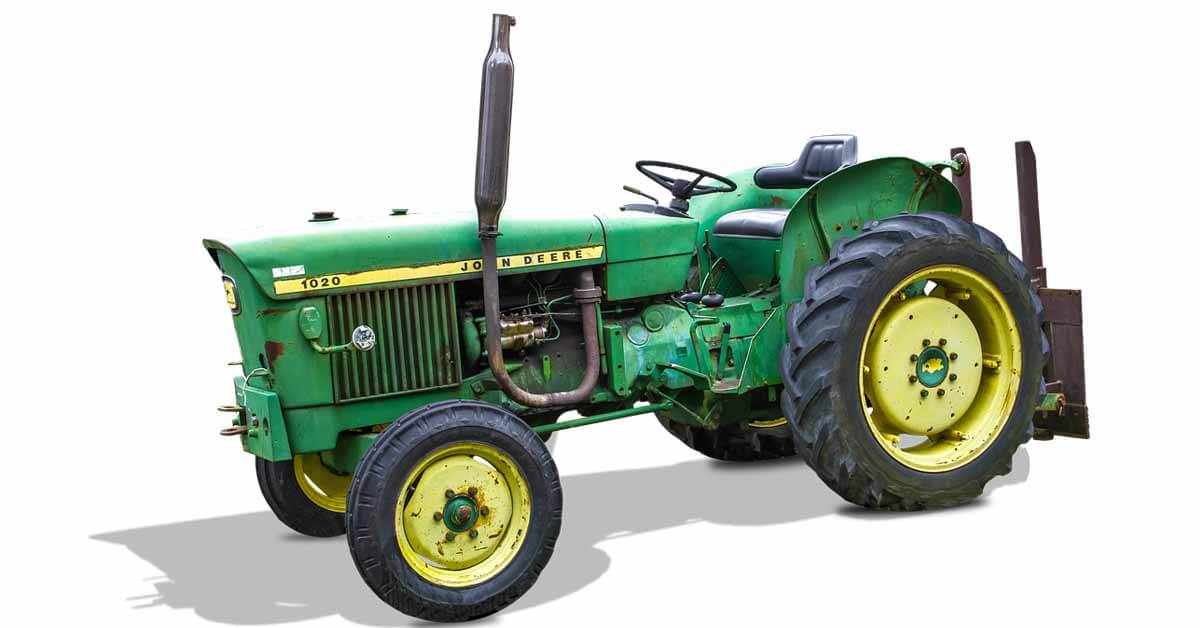
John Deere 6155R: Overview
The John Deere 6155R is a member of the 6R Series utility/row-crop tractors designed to blend high horsepower with refined operator comfort and broad versatility.
Built to handle tasks from heavy tillage and loader work to row-crop operations and transport, the John Deere 6155R emphasizes efficiency, reliability, and ease of maintenance for daily farm use and progressive operations.
It typically fits mid-sized farming operations that require robust power, excellent hydraulic and PTO performance, and sophisticated integrated control options.
Key specifications at a glance
-
Engine: 6.8L six-cylinder PowerTech Final Tier 4 (FT4) engine, designed for strong torque across a broad RPM range and efficient fuel use.
-
Rated engine power: approximately 155 hp (116 kW) under standard conditions.
-
Maximum engine power: often cited in the 165–171 hp range (depending on configuration and market), with IPM (Intelligent Power Management) boosting output for demanding tasks.
-
Transmission options: AutoQuad PLUS, DirectDrive ECO, and other transmission choices depending on market; integrated hydraulics and telematics typically available.
-
Drive: 4WD with available mechanical or hydraulic front-axle engagement options, heavy-duty axles, and substantial lift capacity for implements.
-
PTO: mid-range and rear PTO options, with PTO horsepower aligned to the engine output and transmission.
-
Hydraulics: generous hydraulic flow for implements, with optional high-flow kits for demanding tooling.
-
Cab and comfort: CommandARM, cab suspension, ergonomic controls, optional leather seating in some markets, and advanced in-cab technology for operator efficiency.
Jd 6155r Engine details
-
Displacement: 6.8-liter six-cylinder PowerTech engine designed for FT4 compliance with advanced fuel injection and turbocharging.
-
Fuel and emissions: FT4/Stage IV with robust aftertreatment systems designed to minimize exhaust emissions while preserving power and torque curves.
-
Power management: IPM (Intelligent Power Management) can boost engine output for short periods during heavy-duty tasks, improving performance in hillier terrain or when pulling heavy implements.
-
Maintenance intervals: oil service typically required at longer intervals (e.g., 750-hour oil changes for the main engine lubricant with proper lubricant and filtration), with coolant and filter intervals aligned to OEM recommendations.
Performance And Usage
The John Deere 6155R performs as a versatile and powerful mid-frame tractor, popular among UK farmers and contractors for its ability to handle a broad range of farm tasks with efficiency.
Powered by a 6.8-liter six-cylinder engine, it delivers a maximum power of around 171 hp, which can boost up to 202 hp with an intelligent power management system.
This robust engine produces a maximum torque of 724 Nm at 1600 rpm, enabling the tractor to tackle heavy cultivation and challenging fieldwork while maintaining good fuel efficiency—for example, pulling a plough at 8 kph at about 1700 rpm consumes roughly 18 liters of fuel per hour.
Its transmission options include the semi-powershift PowrQuad, AutoQuad, double-clutch DirectDrive, and a continuously variable transmission (AutoPowr), offering smooth and adaptable power delivery tailored to the job.
The John Deere 6155R tractor’s 4WD and heavy-duty axle systems provide excellent traction and stability across varied terrain, which is essential for tasks like plowing, hauling, and loader work.
Users appreciate the John Deere 6155R’s balance of power and compact size, making the John Deere 6155R suitable for both heavy-duty field operations and lighter tasks such as pulling chain harrows.
It also features advanced emission control systems (including AdBlue and diesel particulate filters) that meet stringent regulations while keeping operating costs manageable.
In practical use, the John Deere 6155R offers solid work rates and reliability, with good operator comfort due to ergonomic controls and a well-designed cab.
The John Deere 6155R can handle diverse implements effectively thanks to its hydraulic capacity and PTO power, supporting a wide range of farm attachments.
While some operators have noted that the tractor may feel sluggish with large implements on the road compared to smaller models, its overall performance and versatility remain highly regarded for mid-sized to larger farming enterprises.
John deere 6155 r Dimensional
-
Overall length, wheelbase, and weight: these vary by exact configuration (transmission choice, axles, and optional front loaders). Typical 6R platform measurements place the John Deere 6155R within a compact to mid-size range suitable for both fieldwork and road transport.
-
Front and rear axle widths: adjustable in many setups to accommodate row-spacing and implement clearance requirements.
-
Cab dimensions: designed for comfortable long-day operation with good visibility, decoupled from drivetrain noise through sound-deadening materials and cab insulation.
-
Ground clearance: adequate for crop clearance and off-field work, with underbody components shielded for rough field conditions.
Jd6155r For Sale Price
-
Price: new tractor prices vary by market, configuration, and optional equipment. The John Deere 6155R typically sits in the mid-to-upper mid-range of the 6R family, reflecting its balance of power, features, and reliability. Used market prices depend on age, hours, condition, and included options but can be significantly lower than new units depending on the region.
-
Total cost of ownership: consider depreciation, maintenance, insurance, and potential telematics service subscriptions in addition to the upfront price.
Common problems and reliability notes
-
Typical challenges for row-crop/fleet tractors in this class can include wear on hydraulic components under heavy-use scenarios, turbocompressor-related boost issues at high altitude or extreme temperatures, and electrical harness wear in demanding field conditions.
-
Routine issues may involve coolant leaks, minor hydraulic fluid seepage around seals, and occasional sensor or ECU communication hiccups when exposed to harsh operating environments.
-
Regular maintenance and preventive checks (filters, fluids, belt integrity, and sensor connections) help minimize downtime and preserve performance.
Maintenance schedule (typical guidelines)
-
Daily/first-use checks: fluid levels (engine oil, hydraulic oil, coolant), tire pressures, visual inspections for leaks or loose components, and verification of electrical connections.
-
Weekly to monthly: air filter inspection, fuel filter checks, battery condition, and lubrication points as per manual.
-
Every 250–500 hours: more thorough hydraulic system checks, filter changes per the manufacturer’s recommendations, coolant condition monitoring, and inspection of belts and pulleys.
-
Every 750 hours: engine oil and filter change, fuel filter replacement, hydraulic oil/filter service (if specified by the model), and general system diagnostics.
-
Every 1,500 hours or more: transmission and hydraulic oil service (where applicable), coolant changes, and full systems diagnostic checks to ensure optimal performance.
Note: Always refer to the official Operator’s Manual for the exact interval values and service procedures for your specific model, market, and configuration.
Attachments and compatible implements
-
Front loaders: compatible with a range of John Deere loaders, including common loader models designed for mid-range tractors (e.g., 600R or similar series depending on market).
-
Backhoe attachments: compatible backhoes and mounting kits designed for 6R-series tractors, when the loader is not installed.
-
Tillage and planter implements: standard three-point hitch attachments, three-point category, and high-flow hydraulic-rated implements suitable for mid-range PTO and hydraulic capacity.
-
Front weights and ballast: ballast options to optimize weight distribution for traction and lifting capacity.
-
Telemetry and guidance: AutoTrac-ready configurations, with integration for ISO-GLOBAL ISOBUS, and Telematics for remote diagnostics and fleet management.
Maintenance, care, and operator tips
-
Use the recommended oil grade and filter types specified by John Deere for FT4 engines and transmissions to ensure proper lubrication and cooling.
-
Keep the cooling system clean and free of debris to prevent overheating, particularly in dense field conditions and dusty environments.
-
Regularly inspect hydraulic hoses and fittings for wear, leaks, and signs of aging; replace as needed to prevent failures in the field.
-
Calibrate and test telematics and guidance systems to maximize precision farming capabilities and route optimization.
-
Schedule regular preventative maintenance and service intervals to minimize downtime and extend the life of the engine and drivetrain.
Attachments and configurations for specific tasks
-
Row-crop optimization: consider narrower front-to-back configurations and appropriate tires to maximize traction and minimize crop damage.
-
Heavy-duty tillage: high-lift capacity, robust three-point hitch, and optional high-flow hydraulic kits can improve implement performance.
-
Loader work: choose a loader with appropriate lift capacity and reach; ensure ballast is correctly configured for safe operation.
Conclusion
The John Deere 6155R stands out as a versatile, powerful, and operator-friendly option in the mid-to-upper mid-range of the 6R Series.
Its FT4 PowerTech engine, scalable transmission choices, integrated control options, and broad ecosystem of compatible attachments make the John Deere 6155R a capable workhorse for diversified farming operations.
With careful maintenance and appropriate configuration, the John Deere 6155R delivers reliable performance, efficient operation, and favorable total cost of ownership for producers seeking a balance of power, precision, and comfort.





Leave A Comment